What Is the PADI Open Water Diver Course?
The PADI Open Water Diver certification is the entry point into scuba diving. It is the most widely recognised diving qualification on the planet, accepted at every dive centre from the Maldives to Mexico. The course teaches you to dive safely to a maximum depth of 18 metres with a certified buddy, without professional supervision.
What the marketing does not always make clear: this is not a holiday activity. It is a training programme that demands attention, physical comfort in water, and a willingness to learn skills that could one day save your life or your buddy's. The reward is access to 70% of the planet that non-divers never see.
In Hurghada, we run the course over three to four days. The warm water, clear visibility, and calm reef conditions mean you spend less time fighting the environment and more time mastering the skills.
Requirements & Prerequisites
PADI keeps the barrier to entry deliberately low, but there are non-negotiable standards. We have turned away students who met the age requirement but lacked the water confidence. It is never personal, it is safety.
| Minimum Age | 10 years (Junior Open Water), 15 years for full certification |
|---|---|
| Swimming Requirement | 200 metre continuous swim OR 300 metre snorkel with mask, fins, snorkel. Both without flotation aids |
| Float Requirement | 10-minute survival float or tread water in deep water, unaided |
| Medical Fitness | Must complete PADI Medical Statement. Any "YES" answer requires physician clearance |
| Prior Experience | None required. Complete beginners welcome |
| Theory Prep | PADI eLearning recommended before arrival (8–10 hours self-study) |
The Medical Form Matters
The PADI Medical Statement is a screening tool, not a formality. Asthma, heart conditions, epilepsy, and certain medications require a physician's sign-off. We recommend completing this form before you travel. Finding a doctor in Hurghada who understands diving medicine is possible but inconvenient. Do it at home.
Water Confidence Over Swimming Speed
The 200-metre swim is not timed. We have had Olympic swimmers panic underwater and non-swimmers who took to diving naturally. What matters is comfort in water, the ability to relax when your face is submerged, and trust in your equipment. If you have never snorkelled before, spend a few hours in a pool with mask and fins before the course.
Course Structure: How the Three Days Break Down
PADI structures the course into three components: knowledge development, confined water training, and open water dives. In Hurghada, we typically condense this into three intensive days. Here is how it actually works on the ground.
Day One: Theory & Confined Water
Morning is classroom or eLearning review depending on whether you completed the theory online. We cover the physics and physiology that matter: pressure, buoyancy, gas laws, and decompression theory. Not abstract mathematics, practical knowledge you will use on every dive.
Afternoon is confined water, usually in a sheltered bay or shallow reef area with standing depth. You learn to assemble gear, clear a flooded mask, recover a regulator, share air with a buddy, and control buoyancy. These are not party tricks. Mask clearing is the skill students struggle with most, and it is the one that ends dives prematurely when not mastered.
Day Two: Open Water Dives One & Two
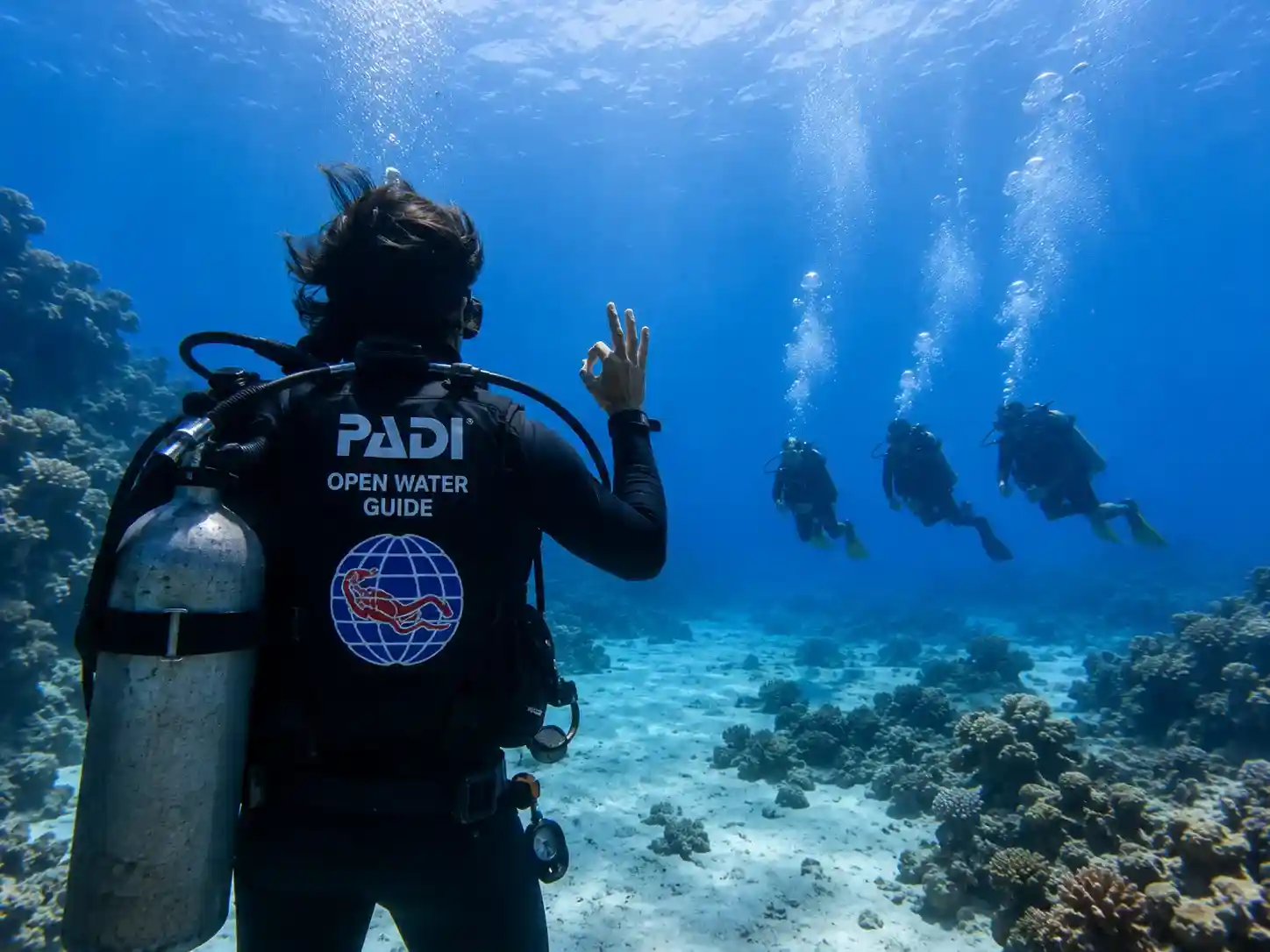
Two boat dives to a maximum depth of 12 metres. You repeat the confined water skills in open water and begin exploring. The first dive is overwhelming for most students: new sensations, new equipment, new environment. By the second dive, something shifts. You stop thinking about breathing and start looking around.
Day Three: Open Water Dives Three & Four
Maximum depth 18 metres. You perform navigation exercises using a compass, demonstrate emergency ascent procedures, and complete a controlled buoyancy swim. Dive four is the graduation dive. If you have mastered the skills, your instructor signs the certification paperwork. If not, we add a fourth day. PADI standards allow for extra training at no additional cost in most centres, including ours.
| Total Dives | 4 open water dives minimum (plus confined water sessions) |
|---|---|
| Maximum Depth | 18 metres / 60 feet |
| Student-to-Instructor Ratio | Maximum 4:1 (we prefer 2:1 or 3:1) |
| Course Duration | 3–4 days standard |
| Certification Validity | Lifetime. No renewal required |
| Depth Limit After Cert | 18m with buddy, no professional supervision needed |
What You Actually Learn (Beyond the Brochure)
The PADI curriculum covers five knowledge areas and twenty-four skills. Some are obvious: how to breathe underwater, how to clear your mask, how to share air. Others are subtle but more important in the long run.
Buoyancy Control
This is the skill that separates a certified diver from a good diver. It takes most students the full course and several post-certification dives to feel natural. You learn to hover motionless at any depth, ascend without kicking, and descend without plummeting. In the Red Sea, where coral is fragile and depth changes are dramatic, buoyancy is not optional. It is the foundation of responsible diving.
Underwater Navigation
Using a compass underwater is disorienting at first. You learn to set a heading, count kick cycles to estimate distance, and return to your starting point. In Hurghada's clear water this is easier than in murky conditions, but the skill transfers everywhere.
Emergency Procedures
You practice controlled emergency swimming ascents (CESA), alternate air source use, and tired diver tows. These are skills you hope never to use, but the practice builds confidence. A diver who knows they can handle an emergency is a calmer diver, and calm divers make better decisions.
Dive Planning
You learn to use the RDP (Recreational Dive Planner) table or eRDPML to calculate no-decompression limits, surface intervals, and residual nitrogen. In the era of dive computers, some students question why manual tables matter. The answer: understanding the principles behind the computer's calculations makes you a safer diver when technology fails.
Equipment During the Course
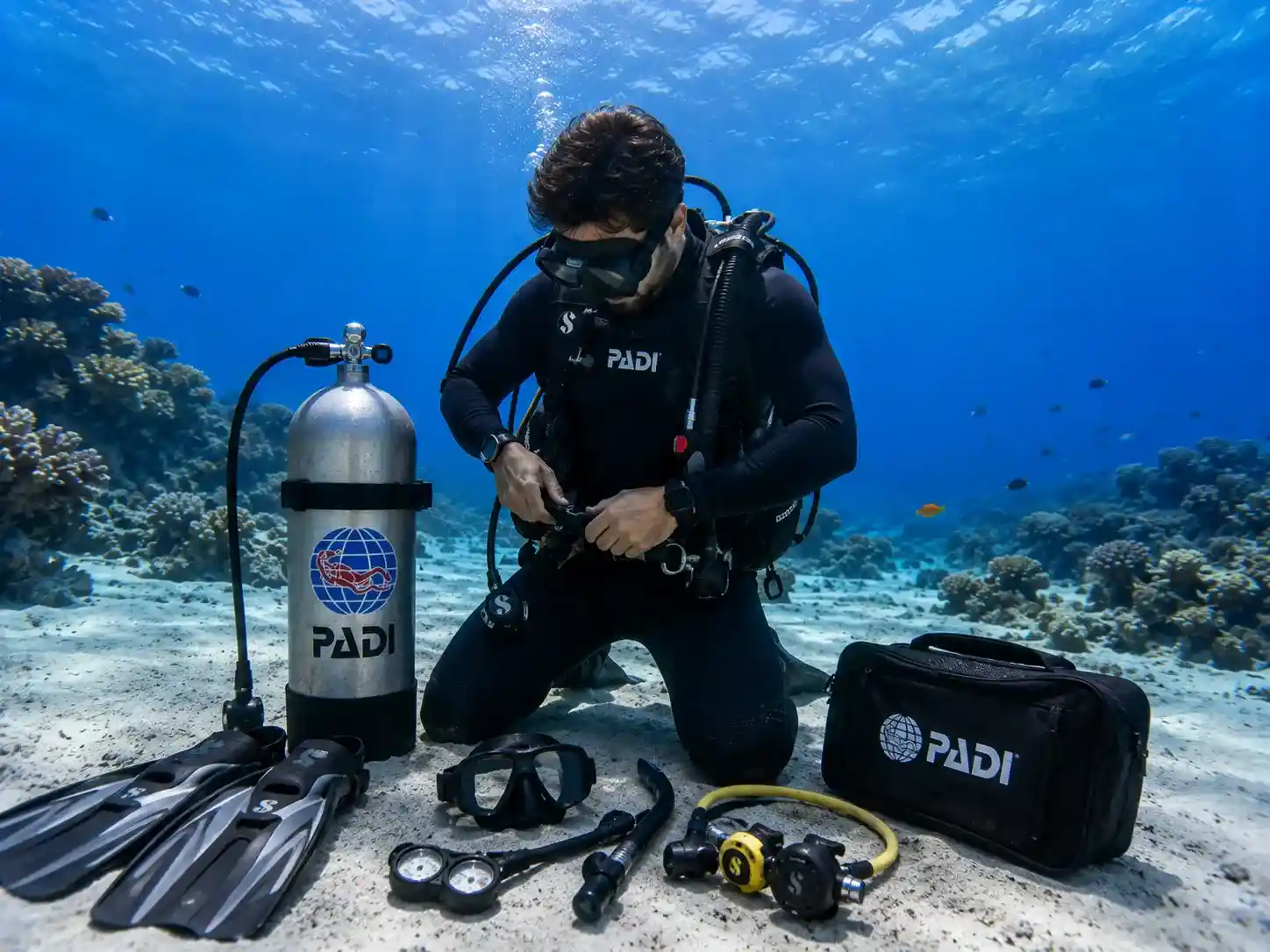
All equipment is provided as part of the course fee. You will use a BCD (buoyancy control device), regulator with alternate air source, dive computer, wetsuit or rash guard, mask, fins, and weights. In Hurghada's 27–29°C summer water, a 3mm shorty or even a rash guard is sufficient. Winter courses (December–March) require a 5mm full suit.
We recommend purchasing your own mask and snorkel before the course. A mask that fits your face shape prevents the leaks that turn a pleasant dive into a constant battle. Everything else can wait until you know you are committed to the sport.
What to Bring
- Swimwear and a towel
- Reef-safe sunscreen (non-negotiable in the Red Sea)
- A water bottle and light snacks for the boat
- Your PADI eLearning completion certificate if done online
- Signed medical form or physician clearance
- Logbook (provided if you do not have one)
Why Hurghada Is the Ideal Place to Learn
We are biased, but we are also experienced. We have taught this course in Thailand, the Caribbean, and the Mediterranean. Hurghada offers specific advantages for beginners that are hard to match.
Shallow, Calm Reefs
Giftun Island, Abu Ramada, and the house reefs off Hurghada offer sandy bottoms at 5–8 metres with gradual slopes. If a student has a buoyancy issue or needs to surface, the depth is manageable and the bottom is sand, not coral. You learn without destroying the environment or risking injury.
Visibility That Builds Confidence
20–30 metre visibility is standard. New divers panic less when they can see their instructor, their buddy, and the surface. Low-visibility environments add a stress factor that has nothing to do with the actual skills being taught.
Warm Water, No Drysuits
Learning in a drysuit adds a full extra layer of complexity. In Hurghada you wear a thin wetsuit or rash guard, which means one less skill to master during your foundational course. You focus on breathing, buoyancy, and awareness, not zipper management and air dumps.
Marine Life That Rewards Attention
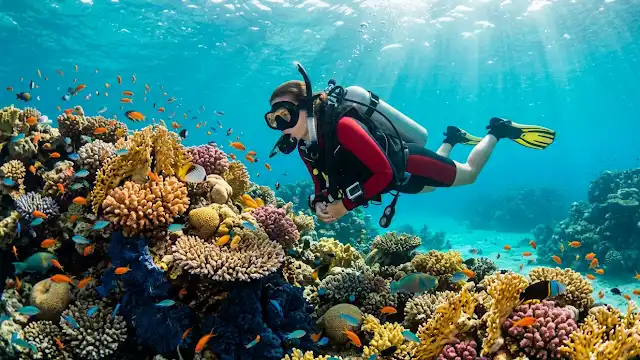
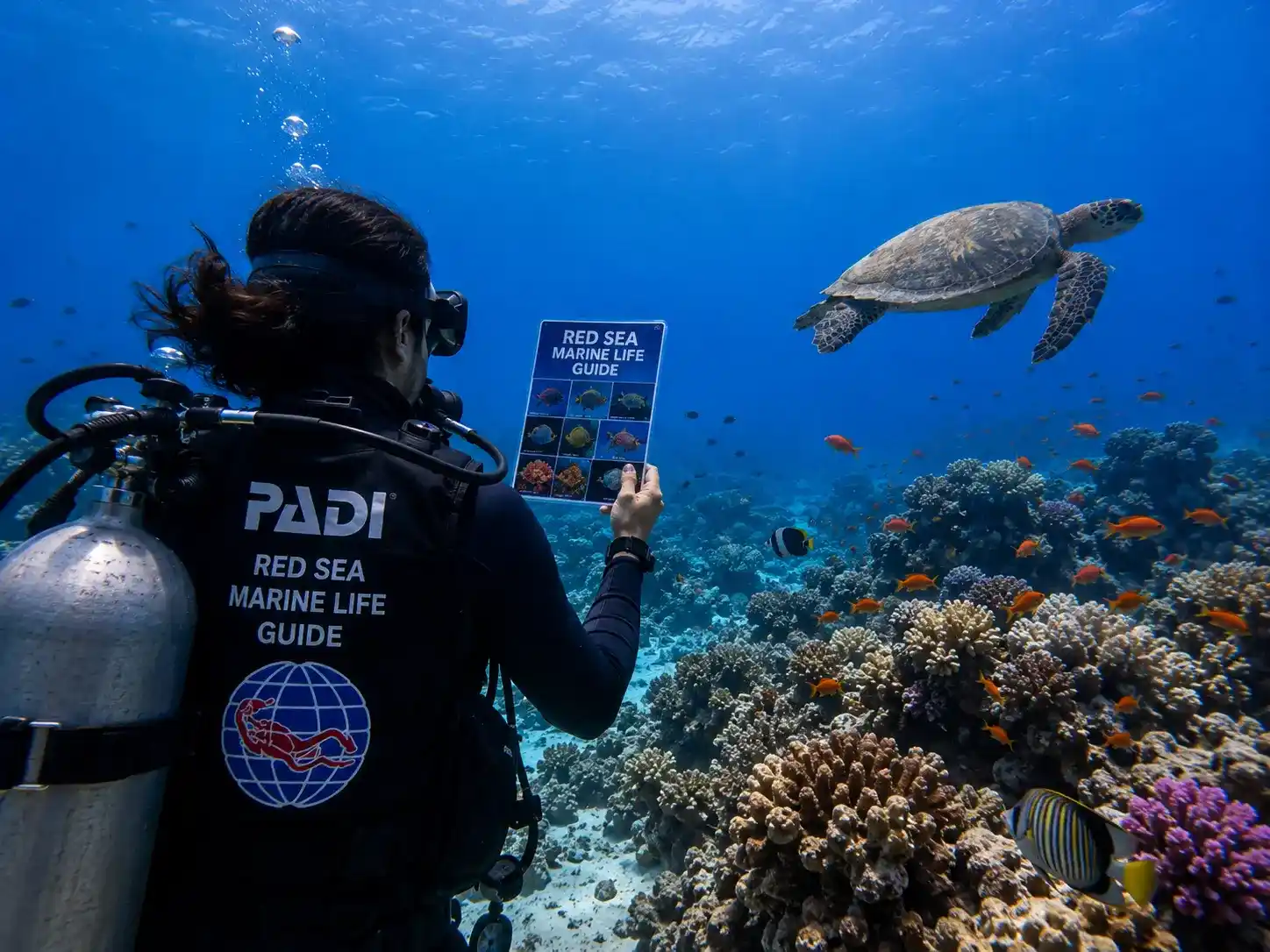
Even on training dives, you will see angelfish, parrotfish, moray eels, and possibly turtles. The Red Sea does not reserve its wildlife for advanced divers. A student who sees a turtle on their first open water dive is a student who finishes the course motivated and excited.
Cost & Time Investment
Pricing varies by centre, season, and whether you choose eLearning or classroom theory. In Hurghada, the course is significantly more affordable than in Europe or North America, without compromise in safety standards or instructor quality.
| Standard Course (3–4 days) | €350–€450 including equipment, boat dives, and certification |
|---|---|
| PADI eLearning | €120–€150 paid directly to PADI (optional, replaces classroom theory) |
| Private Instruction | €150–€200 supplement for 1:1 instructor ratio |
| Additional Training Dives | €35–€50 per dive if extra practice needed |
| Not Included | Travel, accommodation, meals, reef tax (€5–€10 per day) |
The eLearning option is worth the money if you have limited time. Completing the theory at home means you arrive ready for water work immediately. Without eLearning, budget half a day for classroom sessions.
After Certification: What Changes
With your PADI Open Water card, you can dive to 18 metres anywhere in the world with a certified buddy. You can rent equipment, book boat dives, and join guided excursions. What you cannot do: dive deeper than 18 metres, dive in overhead environments (wrecks, caves), or supervise other divers.
The natural next step is the Advanced Open Water course, which adds deep diving (to 30m), navigation, and three specialty dives of your choice. Most divers complete Advanced within six months of their initial certification. In Hurghada, we often run the two courses back-to-back for travellers with a week to spare.
Even without advancing, your first twenty dives after certification are where you truly become a diver. The course gives you the tools. The repetition builds the instinct. Dive as often as you can in the first year.
Frequently Asked Questions
Can I fail the PADI Open Water course?
PADI does not use pass/fail terminology, but yes, you can fail to meet the performance requirements. If you cannot complete the skills after reasonable additional training, your instructor will not certify you. This is rare. Most students who struggle simply need an extra half-day of practice. We have never had a student who could not complete the course with patience and the right instruction.
Is the eLearning mandatory?
No. You can complete the theory in a classroom with your instructor. eLearning is simply more convenient for travellers. It takes 8–10 hours and must be completed before the first confined water session.
Can I dive if I wear glasses or contact lenses?
Yes. Prescription mask inserts are available, or you can wear soft contact lenses underwater. Hard lenses are not recommended due to pressure changes. We stock a range of prescription masks at the centre.
What if I am nervous about the mask clearing skill?
This is the most common concern. We spend as much time as you need in confined water until you are comfortable. Some students take five minutes, others take an hour. There is no time limit in training, only in the open water dives where you must demonstrate the skill once. We will not rush you.
Does the certification expire?
No. PADI certifications are valid for life. However, if you have not dived in over a year, most dive centres will require a refresher dive or the PADI ReActivate programme. This is for your safety and insurance compliance.
Can my child take the course?
Children aged 10–14 earn the Junior Open Water certification with a depth limit of 12 metres (ages 10–11) or 18 metres (ages 12–14). They must dive with a certified adult. The course content is identical, but we use smaller equipment and adjust the teaching pace.
Ready to Earn Your First Certification?
The PADI Open Water course is a threshold. On one side is the world you know. On the other is a lifetime of underwater exploration. We have guided thousands of students across that threshold in the Red Sea, and the one thing they all say afterwards is the same: they wish they had started sooner.
Get in touch to book your course. We will handle the logistics, you bring the curiosity.